
Banerjee is personally present in court room one along with her lawyers. A gate pass was issued in the chief minister's name on Tuesday.
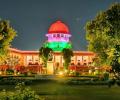
The Supreme Court has expressed strong displeasure over statements made by politicians regarding the Shiv Sena symbol row case, cautioning them about making irresponsible comments.

The Supreme Court has agreed to hear a plea on May 29 seeking a direction to the Nagpur Parsi Panchayat to treat a Parsi woman equally with her male counterparts, even after she marries a person of another faith, challenging a rule that allegedly strips Parsi women of their religious identity upon inter-faith marriage.
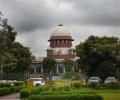
The Supreme Court has directed all High Courts to submit details of pending acid attack cases and is considering setting up special courts for their expeditious disposal. The court is also considering amending the law to include acid attack survivors under the Rights of Persons with Disabilities Act.

The Supreme Court has overturned a Delhi High Court order that had suspended the life sentence of former BJP MLA Kuldeep Singh Sengar in the 2017 Unnao rape case, instructing the High Court to reconsider the plea.

The Supreme Court has dismissed a plea from a Dubai-based businessman seeking consolidation of 24 criminal cases against him, emphasising the need for a victim-centric judicial approach.

The Attorney General has granted consent for initiating contempt action against an advocate, Rakesh Kishore, who hurled a shoe towards Chief Justice of India B R Gavai. The Supreme Court was informed of this development on Thursday.

The Delhi High Court has asked a review committee to examine the blocking of the Cockroach Janta Party's X account, refusing to order its immediate unblocking but allowing the party's founder to appear before the committee.

The Supreme Court has modified its previous order regarding three academics involved in a controversial NCERT textbook chapter on corruption in the judiciary, allowing government bodies to make independent decisions about their association with the academics.

Chief Justice of India expresses concern over the increasing number of digital arrest scams, highlighting a recent case where an elderly woman was defrauded of her retirement benefits.

The Supreme Court has declined to entertain petitions seeking action against Assam Chief Minister Himanta Biswa Sarma regarding a viral video, advising petitioners to approach the Gauhati High Court instead.
The Supreme Court has initiated suo motu action regarding an NCERT class 8 textbook that references corruption in the judiciary, raising concerns about potential defamation and the integrity of the judicial system.
The Telugu Desam Party (TDP) has stated that the ban on the Cockroach Janata Party's social media handles is a symptom of widespread frustration among India's youth regarding employment, competitive examinations, and economic pressures, urging the government to address these concerns through policy changes.
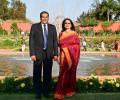
The Supreme Court has appointed former Chief Justice of India Sanjiv Khanna as the sole mediator to resolve a dispute involving businessman Ashokbhai Haribhai Gajera and others in a case linked to textile market projects in Surat. The case involves allegations of siphoning off Rs 1,900 crore and forging documents.

The final day of the GOAT India Tour will also see Messi exchanging greetings with two members of the Indian cricket team at the Ferozshah Kotla Stadium.
The viral rise of the Cockroach Janta Party reflects growing frustration among Indian youth over unemployment, politics, and economic challenges, sparking nationwide debate online.
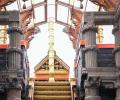
The Supreme Court observed that Hinduism is a way of life, stating that mandatory temple visits or rituals are not necessary to be considered a Hindu; even lighting a lamp at home suffices.

The Supreme Court has directed the Madhya Pradesh government to decide on granting sanction to prosecute minister Kunwar Vijay Shah for his remarks targeting Army officer Col Sofiya Qureshi. The court expressed its displeasure over the delay and the nature of Shah's comments.
The Supreme Court has directed the Delhi Police to investigate the brutal assault on a woman advocate, allegedly by her husband, and has asked for a senior officer to lead the probe. The court also addressed concerns about hospitals refusing the victim admission and directed financial assistance.
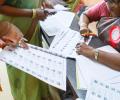
The Supreme Court declined to initiate an inquiry into alleged voter roll irregularities in West Bengal, stating it would amount to a 'fishing inquiry'. The court's decision came after concerns were raised about the addition of a significant number of voters ahead of the state's Assembly elections.
The Supreme Court overturned a Delhi High Court order that had suspended the life sentence of former BJP MLA Kuldeep Singh Sengar in the 2017 Unnao rape case, instructing the High Court to reconsider the plea.

The pleas challenging SIR claimed that the Election Commission does not have powers under Article 326 of the Constitution, the Representation of the People Act, 1950 and the Rules made under it to carry out SIR in a larger form.

The Supreme Court has expressed concern over mining activities in the Aravalli hills and range, deferring any orders in favour of mining lease holders until it is fully satisfied with the environmental impact.
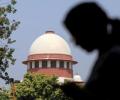
The Supreme Court of India has upheld the Election Commission's documentation framework for the Special Intensive Revision of electoral rolls, affirming the commission's authority and stating that Aadhaar is not proof of citizenship.
The Supreme Court has allowed former West Bengal chief minister Mamata Banerjee and others to file fresh applications regarding their claim that victory margins in 31 constituencies in the recent assembly polls were less than the deletion of votes during the Special Intensive Revision (SIR) of electoral rolls.
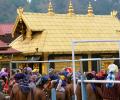
The Shabari story in the Ramayana found mention before a nine-judge constitution bench of the Supreme Court on Wednesday while hearing petitions related to discrimination against women at religious places, including the Sabarimala temple in Kerala.

The Supreme Court has permitted the NIA to file its charge sheet upon completion of the investigation into the incident in West Bengal where judicial officers were illegally confined by a mob.
The Supreme Court of India questioned the Centre regarding the eligibility of non-devotees to challenge the customs of the Sabarimala temple in Kerala, during a hearing on religious freedom and discrimination against women at religious sites.
The Supreme Court has directed Delhi Police to expedite its investigation into the assault of a woman advocate, allegedly by her husband, while ensuring the safety of the victim and her children.
The Travancore Devaswom Board (TDB), managing the Sabarimala temple, argued in the Supreme Court that religious beliefs should be judged subjectively by the community, as the court hears petitions related to discrimination against women at religious places.

A nine-judge Supreme Court bench has reserved its order on petitions related to discrimination against women at religious places, including the Sabarimala temple, and the scope of religious freedom.
The Supreme Court has expressed serious concern over the 'hostage' situation involving seven judicial officials in West Bengal's Malda district, demanding explanations from state officials and authorising the Election Commission to seek a CBI or NIA probe.

The Supreme Court of India has questioned the legal status of Rohingya refugees living in the country, raising concerns about providing resources to illegal entrants while Indian citizens face poverty.
The Supreme Court has agreed to hear a plea challenging the Election Commission's decision to conduct Special Intensive Revision (SIR) of electoral rolls in Tamil Nadu, Kerala and West Bengal. The court is also addressing concerns about disenfranchisement and citizenship issues related to the revision process.
The Supreme Court granted bail to the wife of the alleged 'kingpin' of a Rs 3,700-crore scam and directed that no court shall de-freeze the assets attached by the probe agencies in the case till the trial in the FIRs against the accused are concluded.
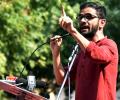
The Supreme Court granted interim bail to two Delhi riots accused, while addressing concerns about conflicting views on bail under the Unlawful Activities Prevention Act (UAPA). The court referred the question of law on whether prolonged incarceration can override UAPA restrictions to a larger bench.
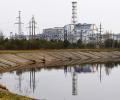
The Supreme Court is reviewing a plea challenging the 2025 SHANTI Act, which caps liability at Rs 3,000 crore for nuclear plant incidents, raising concerns about victim compensation and operator accountability.

The Supreme Court has criticised the Ghaziabad police's investigation into the rape and murder of a four-year-old girl, summoning senior officials and demanding a court-monitored probe.
The Supreme Court has directed the CBI to submit a status report on the FIRs related to the 2023 Manipur ethnic violence and is considering having the Manipur or Gauhati High Courts monitor the trials.

The Supreme Court of India has voiced concerns about the potential consequences of individuals questioning religious practices in constitutional courts, warning it could lead to the fragmentation of religions and civilisation. A nine-judge Constitution bench is hearing petitions related to discrimination against women at religious places and the scope of religious freedom.
